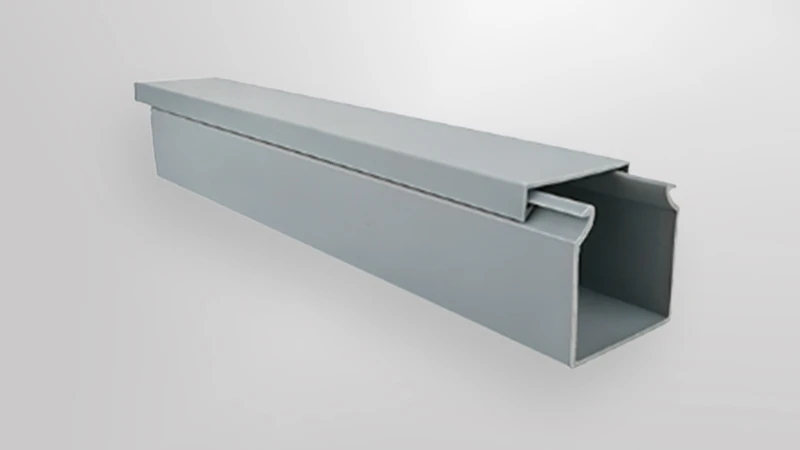
Cable trunking is a common component used in electrical installations to organize, route, and protect wires and cables. A typical system consists of a trunking channel, a removable cover, and various connection and mounting accessories. Together, these components create a defined routing space that keeps cables arranged along planned paths. Cable trunking is widely used in buildings, power systems, industrial equipment, telecommunications, and low-voltage installations where organized cable management is required.
The basic operating principle is that the trunking body provides a continuous routing enclosure for electrical wiring. Once cables are placed inside the channel, they can be arranged along the intended direction and secured with suitable ties, clips, or fixing components. This helps maintain a clear cable layout and reduces unnecessary cable clutter, particularly in installations containing multiple circuits.
The cover provides an additional layer of physical protection. After the wiring has been installed, the cover closes the upper section of the trunking and helps shield the cables from dust, debris, accidental contact, and minor external impact. A covered routing system also creates a cleaner appearance and makes cable installations easier to manage within buildings and equipment spaces.
Cable trunking can also support separation and cable organization. Different types of wiring can be routed through designated sections or arranged according to the requirements of the electrical installation. Power, control, and communication cables may require different routing arrangements depending on applicable standards and the specific electrical design. Proper separation can help reduce the potential for unwanted interference and simplify future identification.
Another useful feature is installation flexibility. Trunking systems can incorporate straight sections, bends, junctions, and other accessories to accommodate changes in cable direction and site layout. When equipment locations or routing requirements change, the system can often be modified by adjusting sections or adding compatible components.
Cable trunking also makes inspection and future cable management more convenient. With a removable cover, maintenance personnel can access the wiring inside the channel for visual inspection, cable replacement, additional connections, or reorganization when necessary.
In practical terms, cable trunking works by combining an enclosed routing channel with a protective cover and suitable mounting accessories. Proper selection of trunking dimensions, routing methods, and cable arrangements can create a cleaner and more organized electrical installation while improving accessibility for inspection, maintenance, and future modifications.